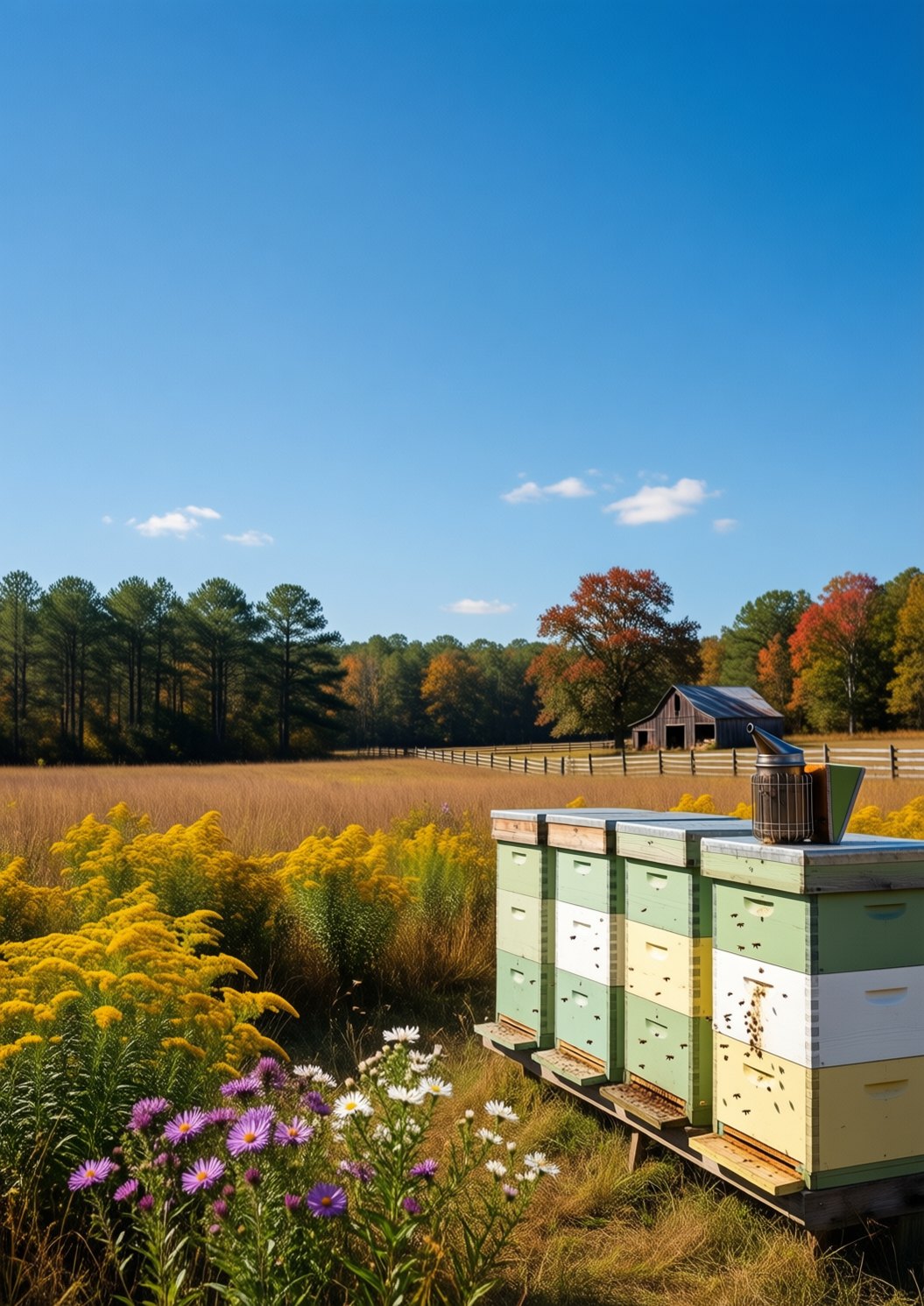
Built for your exact location and each of your hives. It changes with the season and with every inspection report you send in.
Thanks for taking a look. Everything here is the real thing: this week's issue for your club, built the same way every member's will be. Flip through the pages, click around, and if something doesn't fit how bees are kept in your area, that's exactly what I want to hear.
β Curtis Smith
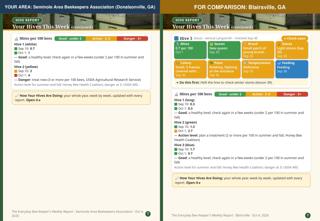
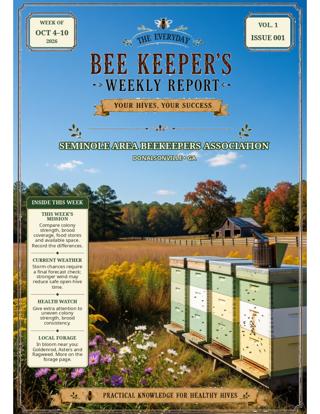
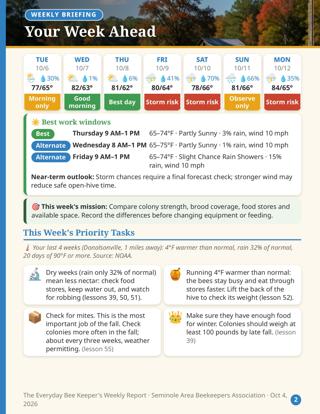
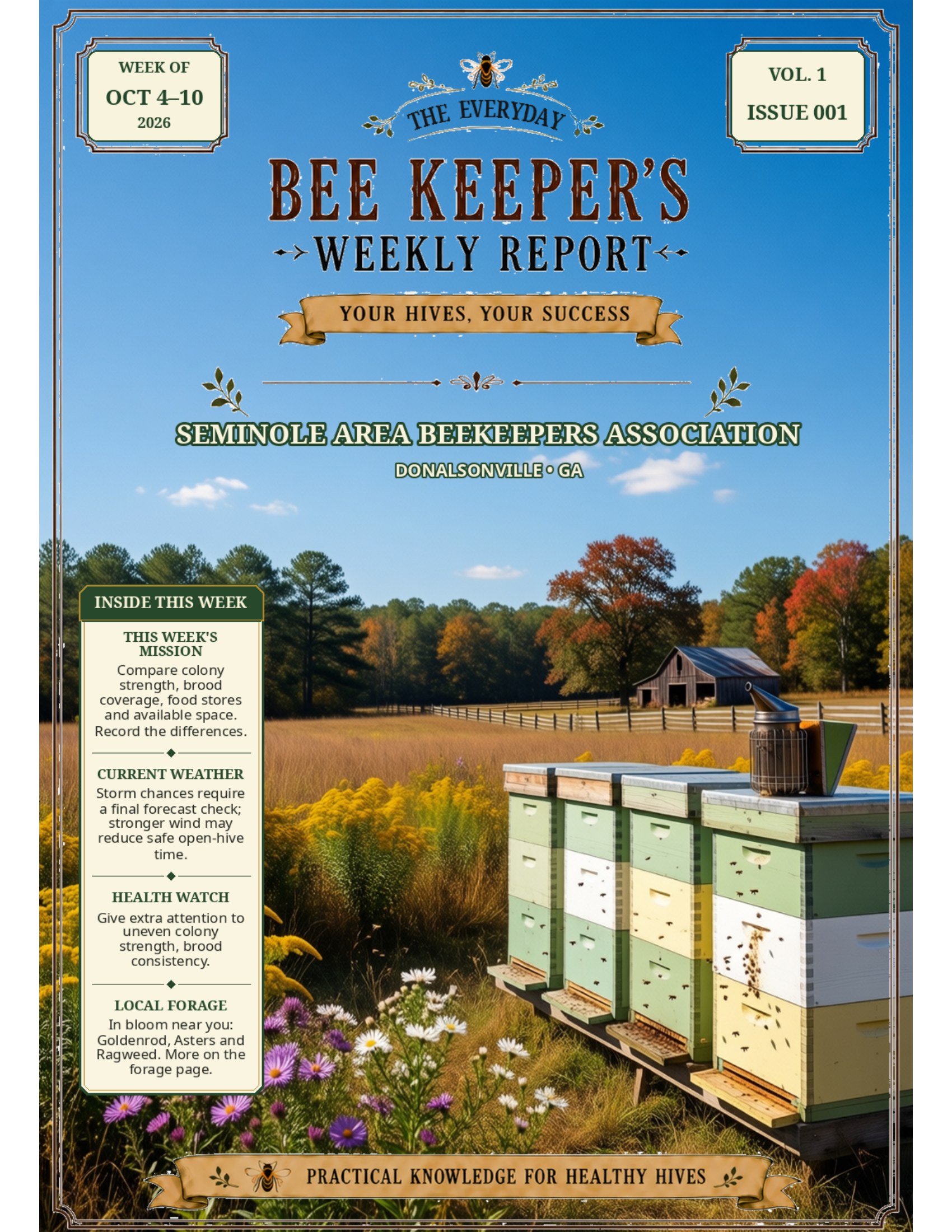
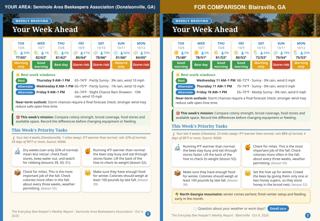
Built fresh every Friday for Donalsonville, just as a member would get it. Flip through every page. The two hives in it are examples: one healthy, one that needs attention.

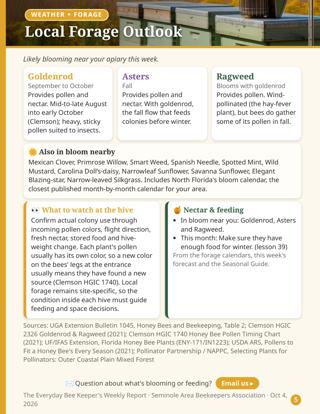
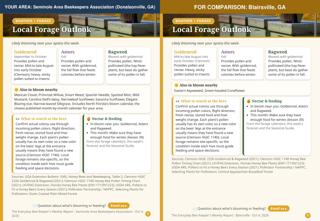
From your local forecast
Now, and what's coming next
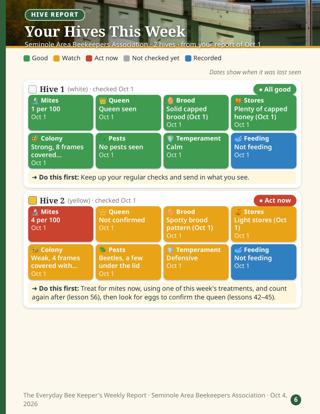
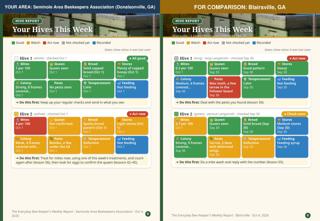
Mites, queen, brood, stores and more
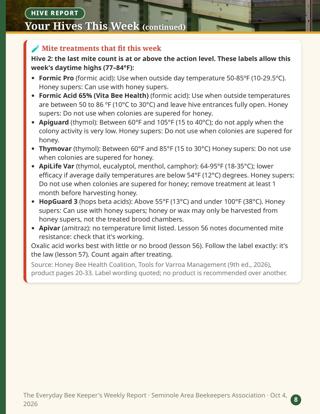
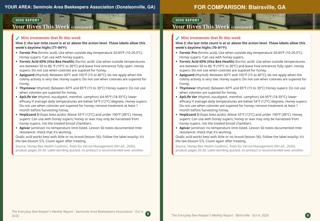
With treatments that fit this week's weather
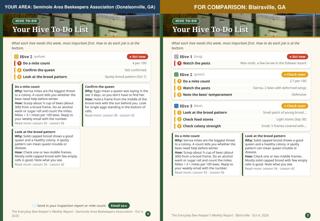
What to do first this week
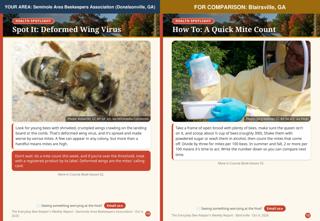
What to watch this season, one pest or disease up close
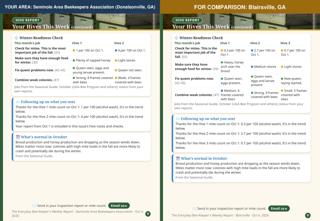
Next month's jobs and seasonal checklists, hive by hive
87-lesson course, beginner to advanced
Send photos, get an answer with sources

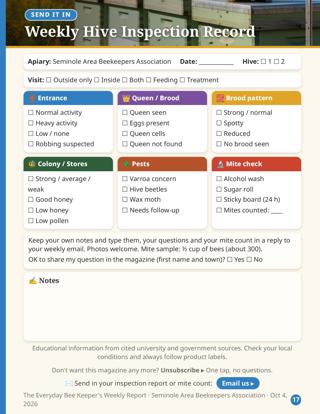
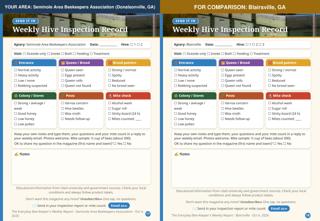
Fill it in at the hive, then send it in
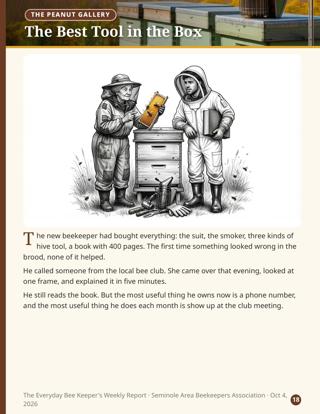
A beekeeping story to end every issue
On paper or on screen
Everything comes from university extension programs, starting with UGA, plus USDA guidance and established research. Every lesson says where it came from.
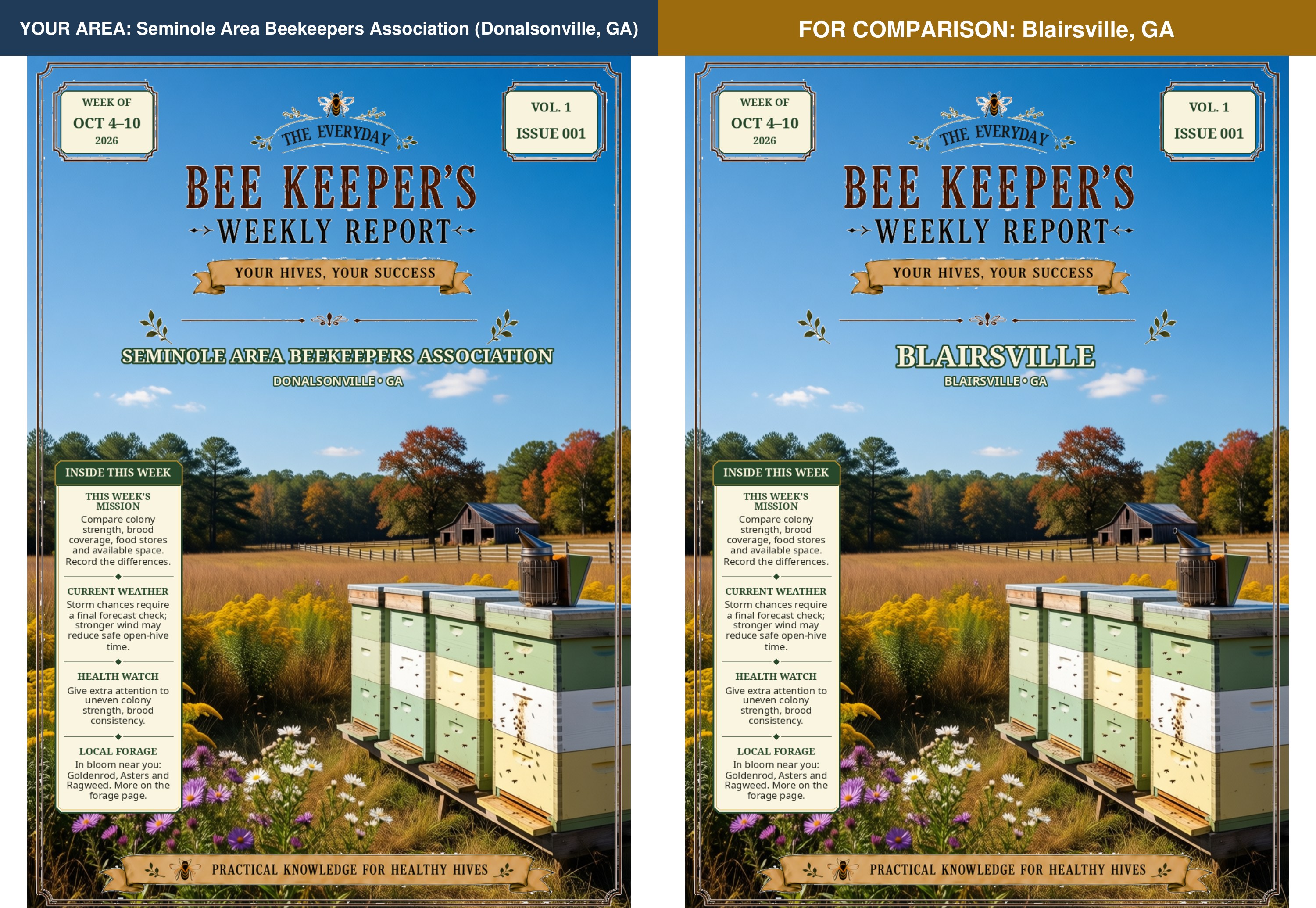
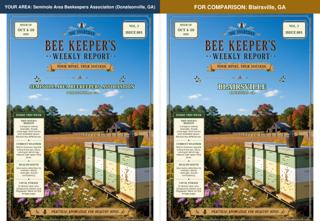
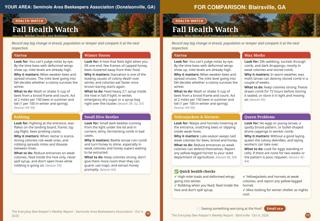
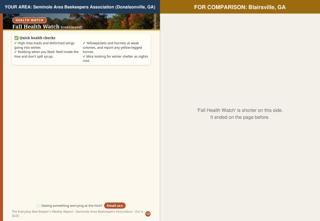
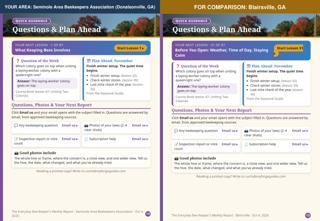
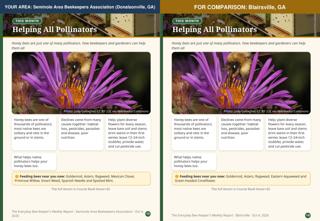
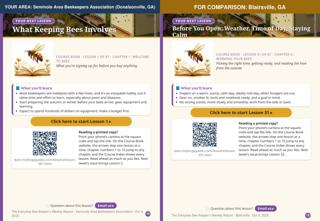
Same week, same example hives. Only the location is different, so everything that changes is because of where the bees are. Grey pages are the same for both.
Different forecast, different best days.
What's flowering near each spot.
What to do first, for each place.

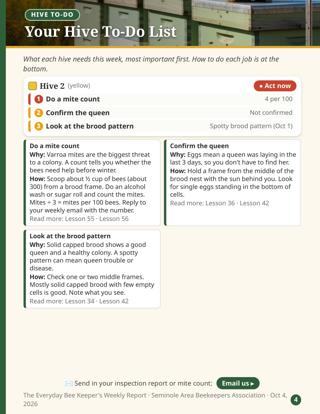
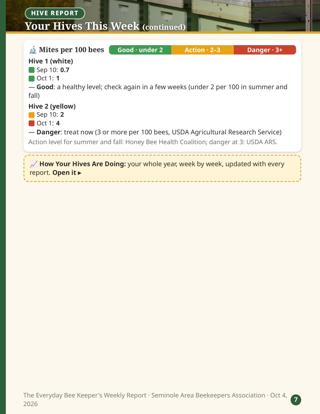
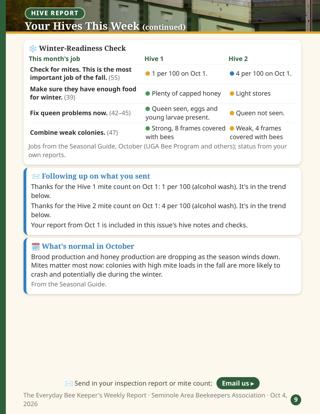
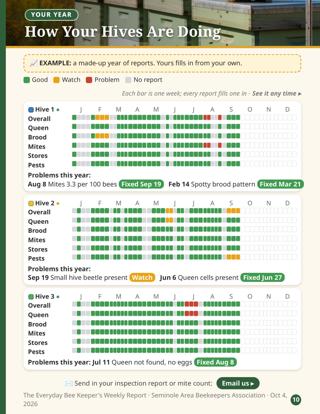
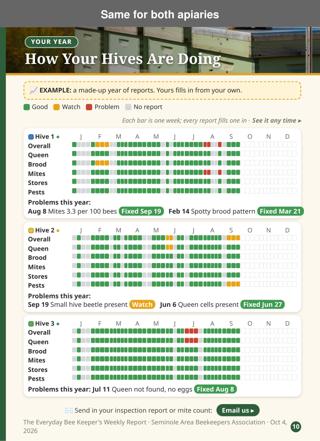
If a hive's mite count goes up, next week's issue tells you what to do about it. These are the two example hives from this week's sample.
Alcohol wash: 12 mites in about 300 bees.
Online form, the paper form, or a reply to your email.
Hive 2 turns red, "Do this first: treat," with treatments that fit the week's temperatures.
Colors: green good Β· yellow watch Β· red act now Β· grey not checked yet. A color only appears when somebody looked.
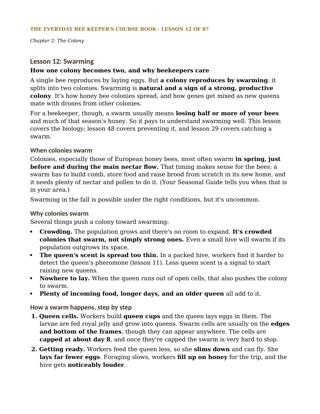
One lesson comes with every issue: 87 lessons, beginner to advanced, covering every topic on UGA's list for the Georgia Certified Beekeeper exam, with a practice exam at the end. Here is a whole one, start to finish: Lesson 12, How Colonies Reproduce: Swarming, a beginner lesson.

After that, you keep 50% off for as long as you want it. All we ask is your honest feedback: what you like, anything you would do differently, and anything that doesn't fit how bees are kept in your area.
Regular price: $99.99 a year (2 months free) or $9.99 a month. Founding Beta Members: first year free, then half of that.
Become a Founding Beta MemberLook over your club's sample. Sign up if you like it.
Free. Your issues are built for your own apiary and hives.
50% off for as long as you want it.
Planned: listed in your members' issues.
When 5 or more members of your club subscribe, each pays $7.99 a month or $79.99 a year instead of $9.99 or $99.99. Tip for presidents: the first few members start at the regular price; once your club reaches 5, everyone switches to the club rate and saves.
Planned: clubs post their own notices.
Meetings: Third Thursday 6PM Β· UGA County Extension Office 426 N. Friendship Avenue Donalsonville, GA 39845 APGG Conference Room 5212 Hwy 39 N Donalsonville, GA 39845
From the Georgia Beekeepers Association club directory.
Comes straight to Curtis. No account, no password. Your exact location is used only to build your issue.
No. Your personal link knows who you are.
University extension programs (UGA first), USDA and established research. Every lesson cites its source.
By the online form, the paper form in each issue, or a reply to your weekly email.
Yes, no obligation. A monthly subscription stops whenever you say. A yearly subscription runs to the end of the year you paid for, then stops. Founding Beta Members pay nothing the first year.